Explosion protection & abort gates
What the standards actually require
NFPA 68 governs deflagration venting — relieving pressure to a safe place so the collector survives and the building is not the relief path. NFPA 69 covers prevention and isolation: stopping a deflagration in the collector from propagating back down the duct into the process that fed it.
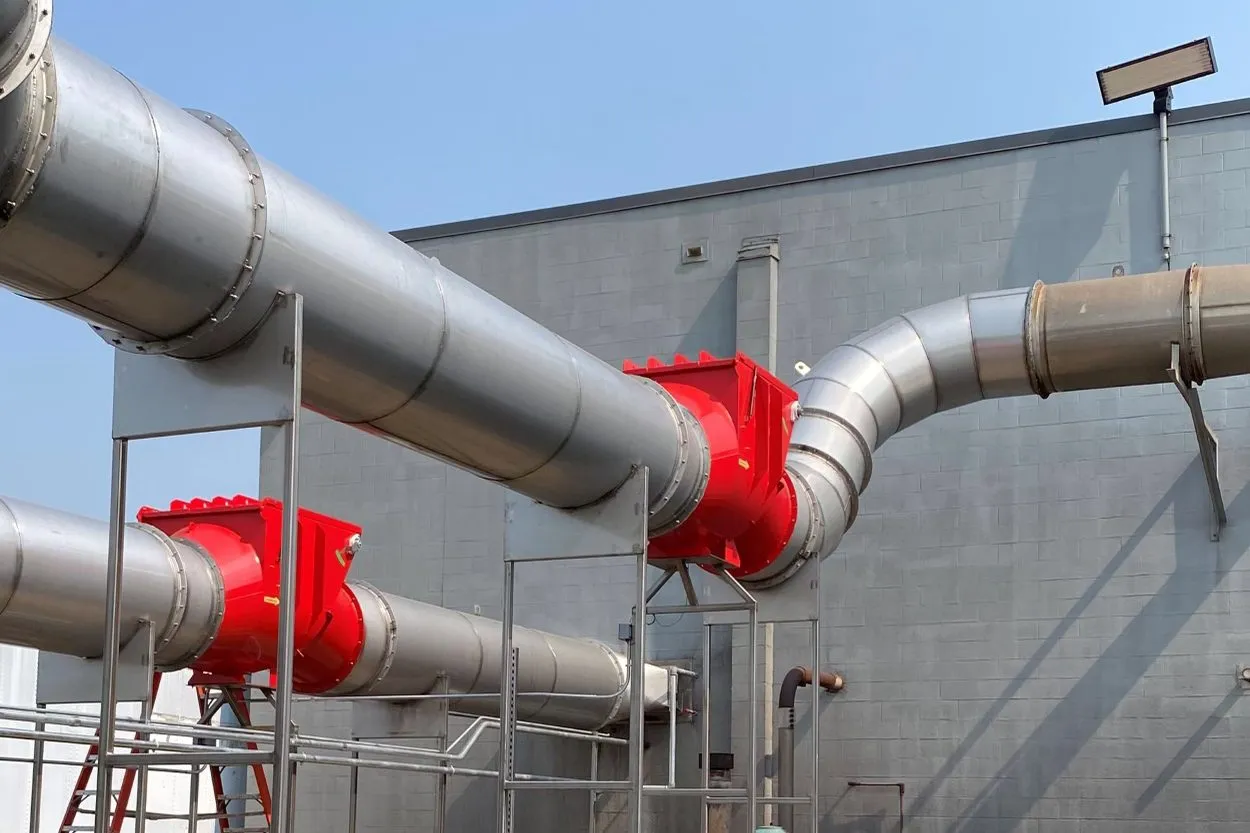
Isolation is the requirement most often missed on systems we are called out to look at. A correctly vented collector with no isolation still puts a flame front into your plant through the ductwork.
The hardware, and what each part is for
Explosion vents relieve pressure outdoors. Flameless vents do the same job where venting outdoors is not possible, quenching the flame front so the collector can sit inside a building. Chemical isolation suppresses the event in the duct; mechanical isolation valves close it off physically.
Spark detection and extinguishing systems catch the ignition source upstream, in the duct, before it reaches a collector full of accumulated dust.